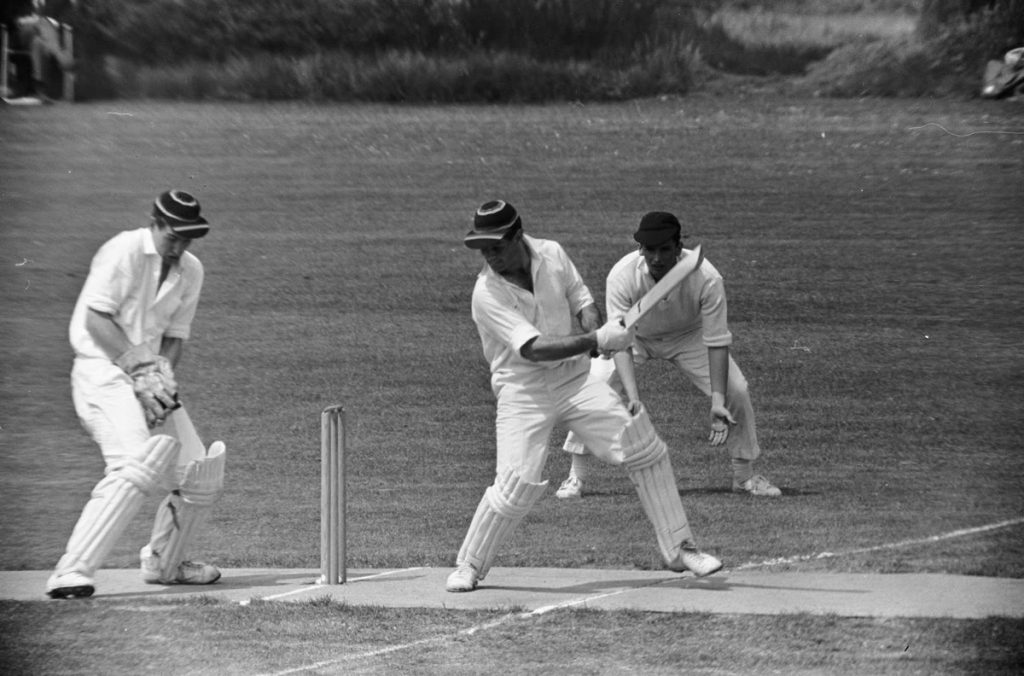
Ask someone who doesn’t follow cricket what they know about it, and you’ll often hear the same joke: “Isn’t that the game that lasts five days and still ends in a draw?” Sometimes, yes. But cricket also comes in a version that finishes in about three hours, packed with big hits and close finishes. The sport has several formats, each with its own rhythm and appeal. Here’s how they differ.
A Few Basics First
A few terms apply to every format.
- Innings: a team’s turn to bat. An innings ends when ten of the eleven batters are out, when the overs run out in limited-overs cricket, or when the batting side’s captain chooses to stop (called a declaration, which happens in Test cricket).
- Over: a set of six legal deliveries bowled by one bowler from one end. Then a different bowler takes over from the other end.
- Wicket: this word means several things, but in scoring it refers to a batter being dismissed. “Five wickets down” means five batters are out.
The team with more runs wins, though as you’ll see, Test cricket adds a twist.
Test Cricket: The Long Game
Test cricket is the oldest international format, played since the 1870s. A Test match is scheduled for up to five days, and each team gets two innings. Players wear white clothing and use a red ball, though some Tests are now played under lights with a pink ball, which is easier to see in the evening.
There are no limits on how many overs a team can bat. A strong batting side might stay in for well over a day. Each day usually involves at least 90 overs, split into three sessions with breaks for lunch and tea.
How a Test is decided
Here’s where the famous draw comes in. To win a Test, you don’t just need more runs. You also need to dismiss the opposition twice. If time runs out before that happens, the match is drawn, even if one team is far ahead on runs.
That makes Tests deeply tactical. A team that’s behind might bat slowly and defensively for an entire day just to survive. A captain who’s ahead must decide when to declare, leaving enough time to bowl the other side out without giving them a realistic chance of chasing the target. The final hour of a close fifth day can be as gripping as anything in sport.
Results can be a win, a loss, a draw, or, very rarely, a tie, where both teams finish with identical totals and the side batting last is all out.
One-Day Internationals: Cricket in a Day
The One-Day International, or ODI, gives each team a single innings of up to 50 overs. The whole match fits into one day, usually around seven to eight hours including the break between innings. Players wear coloured kits and use a white ball, and many games are played as day-night fixtures under floodlights.
Because the overs are limited, a few rules change the flow:
- Each bowler can bowl a maximum of 10 overs.
- Fielding restrictions, known as powerplays, limit how many fielders can stand far from the batter during certain phases of the innings.
- There’s almost always a winner. If rain cuts the game short, a mathematical method adjusts the target for the team batting second.
ODIs reward pacing. Teams often build steadily through the middle overs and then attack hard in the final ten. The Cricket World Cup, held every four years, uses this format.
T20: Short, Loud and Fast
Twenty20 cricket gives each team just 20 overs. A match typically lasts around three hours, which makes it a natural fit for an evening out. Each bowler can bowl a maximum of 4 overs, and the first six overs of each innings are a powerplay with only two fielders allowed outside the inner circle.
With so few deliveries available, batters take risks from the very first ball. Sixes fly and fielding becomes spectacular. If the scores are level at the end, many competitions use a Super Over: each side bats one more over to settle it.
T20 has spread cricket to new audiences around the world, and franchise leagues in several countries draw huge crowds.
Other formats you might hear about
England’s The Hundred uses 100 balls per side instead of counting in overs. Domestic first-class cricket uses the same multi-innings structure as Tests, usually over four days. And there are even shorter experiments, such as T10, played mostly in exhibition-style leagues.
Which Format Should You Watch First?
If you’re brand new, start with a T20 match. It’s short, the action is easy to follow, and you’ll pick up the basics of batting, bowling and fielding quickly. Once you’re comfortable, try an ODI to see how teams pace a longer innings. Then, when you’re ready, give a Test a chance, perhaps the last day of a close match. That’s when you’ll understand why so many fans call it the best version of the sport, draws and all.

Eddy is a professional content writer with over 10 years of experience creating engaging, informative, and reader-focused content across a wide range of topics. Throughout his career, he has developed a strong reputation for producing well-researched, original, and easy-to-understand articles that help readers find the information they need quickly and confidently.