Most capsule wardrobe guides assume you’re starting from scratch with a few hundred dollars to spend on perfect basics. That’s not how most of us live. The good news is that a capsule wardrobe is really just a small set of clothes that work together, and you probably own half of it already.
The goal isn’t a magic number of items or a Pinterest-ready closet. It’s getting dressed faster, buying less, and actually wearing what you pay for. Here’s how to get there when money is tight.
Start With What’s Already in Your Closet
Before you buy a single thing, pull everything out and sort it into three piles: wear all the time, wear sometimes, and never wear. Be honest. That shirt you bought two years ago and still haven’t worn is telling you something.
Now look closely at the “wear all the time” pile. These are your real favorites, and they reveal what you actually like rather than what you think you should like. Notice the colors, the fits, and the fabrics. If every pair of jeans you love is high-rise and straight-leg, that’s your answer for the next pair too.
Ask why the rejects get rejected
The “never wear” pile is just as useful. Is it the fit? The fabric itches? It needs ironing? Knowing why something fails stops you from buying the same mistake again, which saves more money than any sale.
Pick a Simple Color Base
A budget capsule works because everything mixes. The easiest way to make that happen is to choose two or three neutral colors and one or two accent colors you enjoy.
- Neutrals: navy, black, gray, cream, olive, tan, or denim blue. Choose the ones already showing up in your favorites.
- Accents: a color that makes you happy, like rust, cobalt, or forest green, used in tops, scarves, or a sweater.
You don’t need to give away everything outside that palette. It’s a filter for future purchases, not a rule for your whole life.
Figure Out Your Real Gaps
Lay out a week of outfits from what you kept. Where do you get stuck? Maybe you have plenty of tops but only one pair of trousers you like, so everything hinges on whether they’re clean. Maybe you have no jacket that works for both a cold office and a weekend walk.
Write those gaps down as a short list, ranked by how often they’d get worn. A pair of everyday pants you’d wear three times a week beats a statement coat you’d wear twice a winter. This list is your shopping plan, and anything not on it waits.
A sample starter capsule
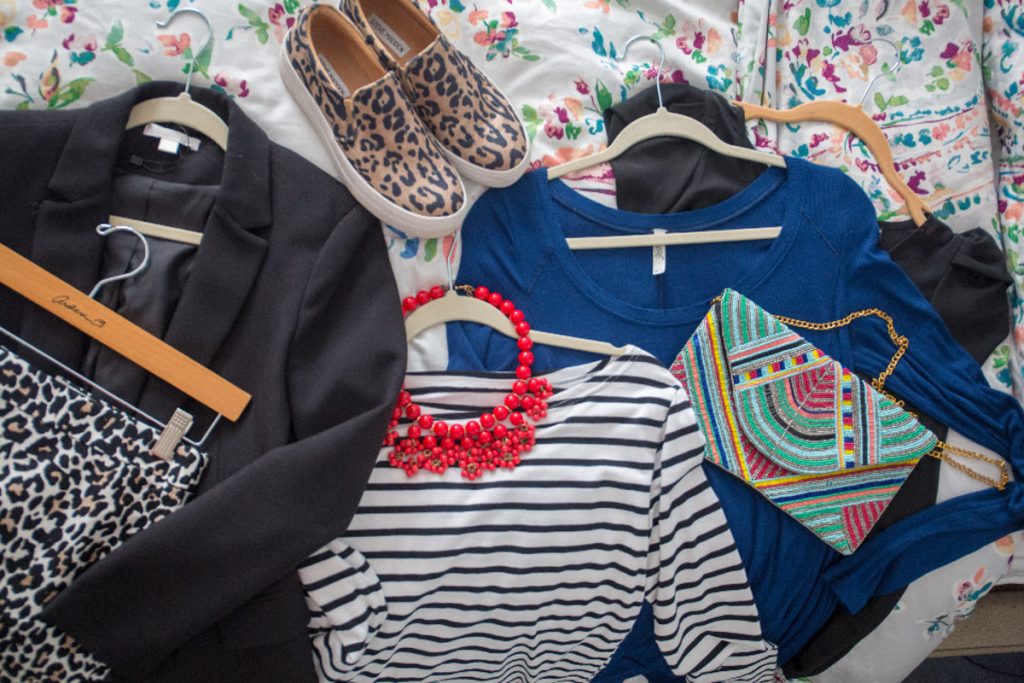
For many people, a workable base looks something like this:
- Two or three pairs of bottoms (jeans, trousers, or a skirt)
- Five to seven tops that layer easily
- One or two sweaters or cardigans
- One jacket for your climate
- Two pairs of shoes you can walk in all day
Adjust it to your life. If you work outdoors or have a strict dress code, your list will look different, and that’s fine.
Spend Smart, Not Fast
Here’s where budget really matters. Buy one gap at a time instead of doing a big shopping trip. Spreading purchases over a few months lets you see how each new piece fits in before adding the next one.
Put your money where the wear is. Shoes and outerwear take a beating, so a slightly better pair there often lasts years longer. Plain t-shirts and tanks, on the other hand, can be inexpensive without much downside.
Secondhand stores and online resale are your best friend for wool sweaters, denim, and jackets, since those age well. Check seams, zippers, and fabric pilling before buying, and don’t let a low price talk you into something that doesn’t fit.
Use the cost-per-wear test
Divide the price by how many times you’ll realistically wear something in a year. A sturdy pair of boots you wear most days for several winters can work out cheaper per wear than a bargain top you put on twice. It’s a quick gut check at the register.
Keep It Working Long Term
A capsule only stays cheap if your clothes last. Wash less often and on cooler settings, air dry when you can, and fix small problems right away. Sewing on a loose button takes five minutes and saves a shirt from the donation bag.
Once a season, do a quick check: what got worn constantly, and what sat untouched? Swap out the duds, update your gap list, and resist buying anything that doesn’t connect to at least three things you already own.
Your First Steps This Week
Pull out your closet and sort it. Note your favorite colors and fits. Write down your top three gaps in order of how much you’d wear them. Then buy only the first one, ideally secondhand, and live with it for a few weeks. That slow, deliberate pace is the whole secret. You’ll end up with fewer clothes, more outfits, and a lot less money spent on things you never wear.

Eddy is a professional content writer with over 10 years of experience creating engaging, informative, and reader-focused content across a wide range of topics. Throughout his career, he has developed a strong reputation for producing well-researched, original, and easy-to-understand articles that help readers find the information they need quickly and confidently.