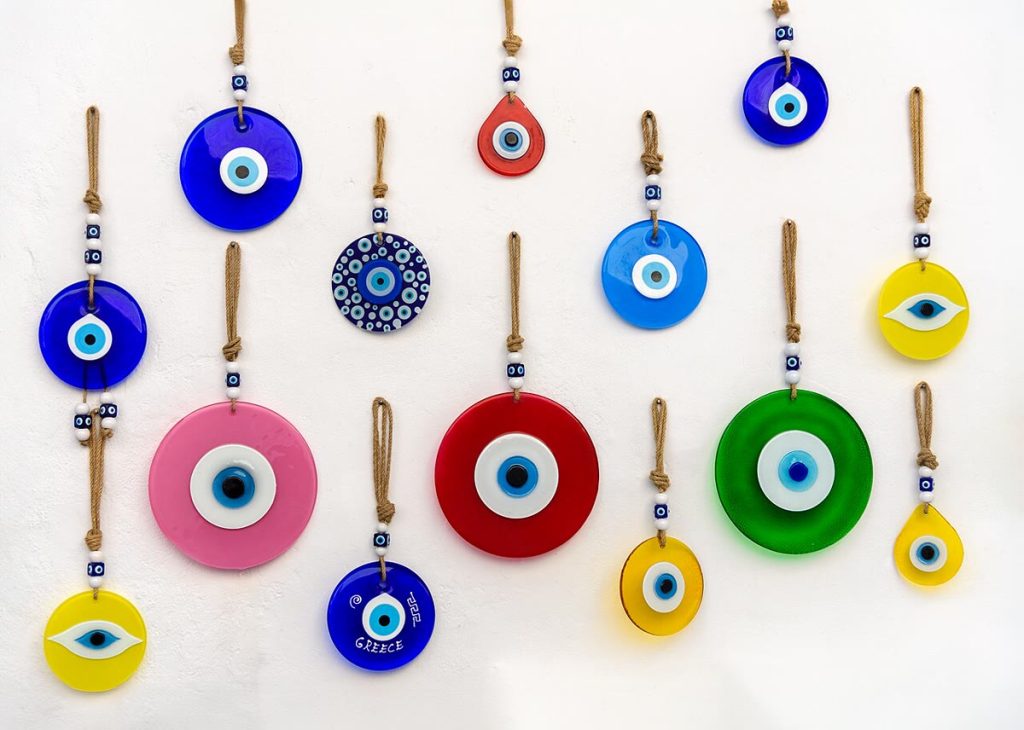
You have probably seen it hanging from a car mirror, dangling on a bracelet, or printed on a phone case: a blue circle with a white ring and a dark dot in the middle, staring right back at you. That is the evil eye charm, and it is one of the oldest protective symbols in the world. Its story is a lot older than any trend.
What the Evil Eye Actually Means
Here is the twist that confuses a lot of people. The evil eye is not the charm itself. The evil eye is the curse, a harmful glare that someone gives out of jealousy or envy. The belief is that when someone looks at you with envy, even without meaning to, it can bring bad luck, illness, or misfortune.
The blue eye charm is the protection against that glare. It is said to reflect the negative energy back to where it came from, like a tiny shield that watches for you. So when you wear one, you are not wearing something evil. You are wearing a guard.
Where the Evil Eye Belief Comes From
Belief in the evil eye goes back thousands of years and shows up across many cultures, especially around the Mediterranean and the Middle East. Ancient Greek and Roman writers mentioned it, and versions of the idea appear in parts of South Asia, North Africa, and Latin America too.
Turkey and the nazar
The classic blue glass charm is most closely linked to Turkey, where it is called a nazar boncuğu, which roughly means “evil eye bead.” Handmade glass nazars are sold all over the country, and you will find them above doorways, in cars, and pinned to babies’ clothes.
Greece and the mati
In Greece, the charm is called a mati, which simply means “eye.” Many Greek families have their own traditions for removing the evil eye if someone thinks they have been hit by it, often involving prayers passed down from grandmothers.
What the Different Colors Mean
Dark blue is the traditional color, but evil eye jewelry now comes in a whole rainbow. Modern charm sellers often give each shade its own meaning. These are popular interpretations rather than ancient rules, but they are fun to know:
- Dark blue: General protection and calm. The original.
- Light blue: Peace, clarity, and broad protection.
- Red: Courage and energy.
- Green: Happiness, balance, and success.
- Pink: Friendship and love.
- Yellow or gold: Health and focus.
- Purple: Creativity and imagination.
If you are buying one as a gift, picking a color with a meaning that fits your friend makes it feel a lot more personal.
How People Use the Evil Eye Today
The symbol has gone fully mainstream. Celebrities wear evil eye bracelets, it shows up in nail art, and the emoji 🧿 (officially called the “nazar amulet”) gets dropped in comments all the time.
Here are some ways people talk about it:
- “My grandma gave me an evil eye bracelet before my exams. I am not taking it off.”
- “Just got my dream job. Posting this with a 🧿 because I am not risking anything.”
- “Everyone keeps complimenting my new car, so I hung a nazar on the mirror.”
That second example is really common. People add the 🧿 emoji when they share good news, as a playful way to keep jealousy away.
What happens if your evil eye breaks?
According to tradition, a cracked or broken evil eye charm means it did its job. It absorbed a strong dose of negative energy meant for you. The usual advice is to thank it, let it go, and get a new one.
Related Protective Symbols
The evil eye often appears alongside other symbols with similar meanings:
- Hamsa: A palm-shaped hand, often with an eye in the center, believed to bring protection and good fortune.
- Red string: Worn on the wrist in several traditions to ward off bad luck.
- Horseshoe: A Western good luck charm, usually hung above doors.
- Eye of Horus: An ancient Egyptian symbol of protection and healing.
Wearing the Evil Eye With Respect
Anyone can wear an evil eye, and most people from the cultures it comes from are happy to see it shared. Still, it is nice to know what it means before you wear it, instead of treating it as just a pretty blue bead. It carries real meaning for a lot of families, and knowing its story makes it feel more special when you put it on.
And if you want a username with a protective, mysterious vibe, words like “nazar,” “mati,” or “bluegaze” are lovely options. Your profile gets a little guardian of its own.

Eddy is a professional content writer with over 10 years of experience creating engaging, informative, and reader-focused content across a wide range of topics. Throughout his career, he has developed a strong reputation for producing well-researched, original, and easy-to-understand articles that help readers find the information they need quickly and confidently.